Quotes About Life20251005
Content about quotes about life20251005 (Auto-generated fallback due to API error).
Life Quotes
Content about Life quotes (Auto-generated fallback due to API error).
Stuck in a rut? Feeling like you've hit a wall in your skillset? The right growth mindset phrases can be powerful tools to shift your perspective and unlock your potential. It's more than just positive thinking; it's about embracing challenges and seeing effort as a pathway to mastery.
At a glance:
- Discover phrases that fuel a growth mindset.
- Learn how to actively use these phrases to reshape your thinking.
- Understand the difference between a growth and fixed mindset.
- See real-world examples of how these phrases change outcomes.
- Get a quick-start guide to injecting growth mindset phrases into your daily life.
Why Words Matter: The Power of Growth Mindset Phrases
Carol Dweck's research on growth mindset highlights a fundamental truth: what you believe about your abilities significantly impacts your performance. Growth mindset phrases aren’t magic, but they act as mental cues that steer you towards learning and resilience. They help you reframe setbacks and view challenges as opportunities for growth.
Think about it: "I'm not good at this" versus "I'm not good at this yet." The subtle addition of "yet" transforms a statement of limitation into a declaration of potential.
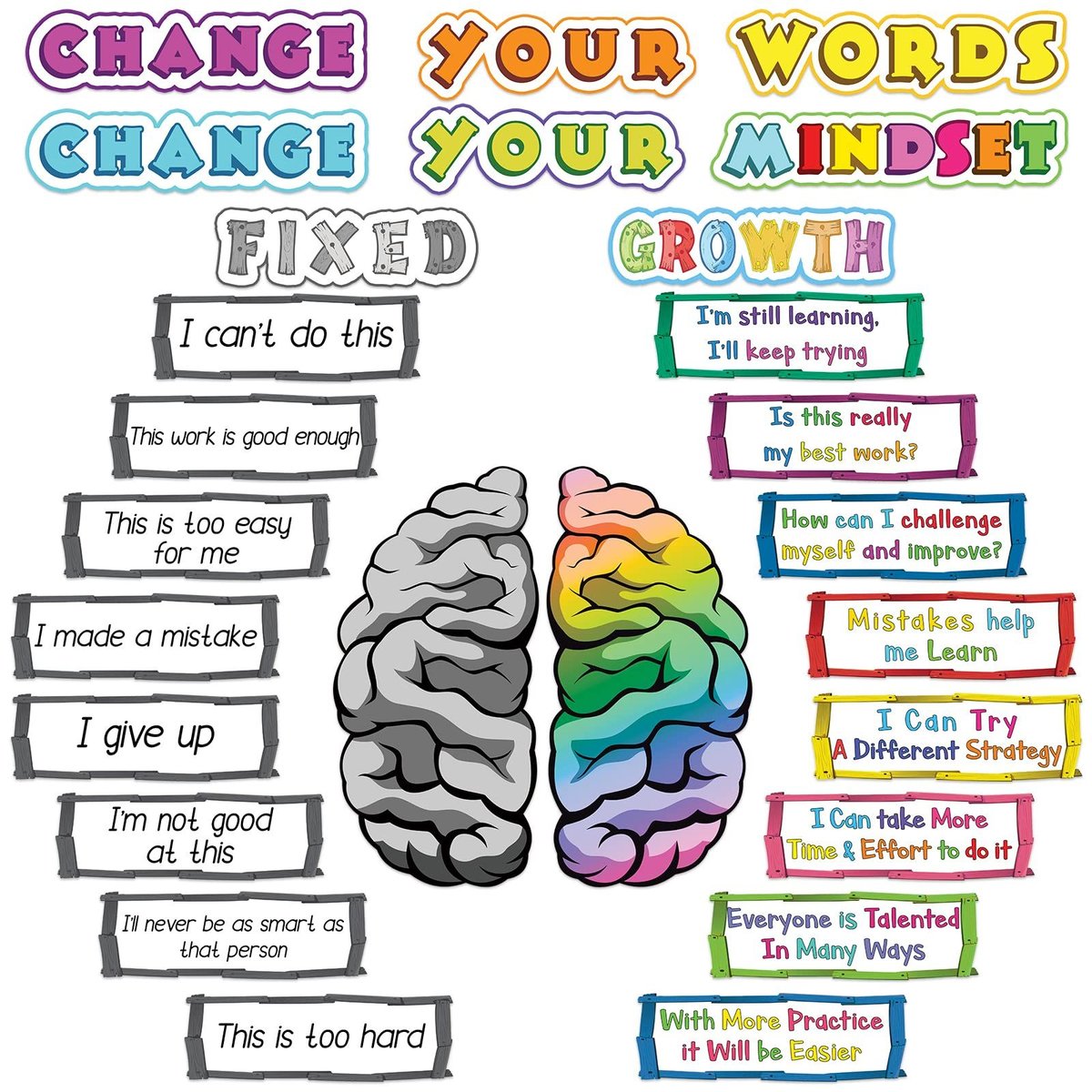
Understanding the Landscape: Fixed vs. Growth Mindset
Before diving into specific phrases, it's crucial to understand the core difference between a fixed and growth mindset.
| Feature | Fixed Mindset | Growth Mindset |
|---|---|---|
| Intelligence | Static; predetermined | Malleable; can be developed |
| Challenges | Avoided; fear of failure | Embraced; opportunity for learning |
| Effort | Unnecessary; sign of low intelligence | Path to mastery; essential for growth |
| Criticism | Taken personally; seen as an attack | Used as feedback; source of improvement |
| Success of Others | Threatening; makes you feel inadequate | Inspiring; lesson in how to improve |
| Growth mindset phrases help you shift from the left column to the right. They are tools for consciously choosing a different perspective. |
Shifting Your Inner Dialogue: Key Growth Mindset Phrases
Here are categories of phrases designed to foster a growth mindset, along with examples:
1. Embracing Challenges:
- Instead of: "This is too hard."
- Try: "This is going to take some effort and I'm up for the challenge."
- Instead of: "I can't do this."
- Try: "What can I learn from this situation to improve?"
- Instead of: "I'm not smart enough."
- Try: "How can I approach this differently?"
2. Valuing Effort and Persistence: - Instead of: "I'm not good at this."
- Try: "I'm not good at this yet, but I will keep practicing."
- Instead of: "I give up."
- Try: "I've come this far, I'll take a break then try a new approach."
- Instead of: "This is taking too long."
- Try: "The effort I put in now will pay off in the long run."
3. Learning from Mistakes: - Instead of: "I failed."
- Try: "What can I learn from this failure?"
- Instead of: "I'm so stupid."
- Try: "Everyone makes mistakes; this is an opportunity to grow."
- Instead of: "I should have known better."
- Try: "Next time, I'll try a different strategy based on what I learned here."
4. Recognizing Progress and Celebrating Small Wins: - Instead of: "I'm still not there yet."
- Try: "I've made progress since I started, and I'm proud of that."
- Instead of: "It's not perfect."
- Try: "It's better than yesterday, and I'm continuing to improve."
- Instead of: "It's not a big deal."
- Try: "Every accomplishment, no matter how small, is worth celebrating."
5. Seeking Feedback and Valuing Learning: - Instead of: "I don't need help."
- Try: "Who can offer me constructive feedback on this?"
- Instead of: "I already know everything."
- Try: "What new things can I learn about this topic?"
- Instead of: "That's not how I do things."
- Try: "I'm open to new ideas and approaches."
Real-World Impact: Growth Mindset in Action
Let's look at some practical scenarios:
- Scenario 1: Learning a New Skill (e.g., coding). A fixed mindset response to struggling with a coding concept might be, "I'm just not a tech person." A growth mindset response would be, "This is challenging, but I'll break it down into smaller steps and find resources to help me understand it better."
- Scenario 2: Receiving Negative Feedback at Work. A fixed mindset response might be defensiveness and blaming others. A growth mindset response would be, "Thank you for the feedback. Can you give me specific examples so I can improve?"
- Scenario 3: Facing a Project Setback. A fixed mindset response might be feeling defeated and giving up. A growth mindset response would be, "This is frustrating, but what can I learn from this setback to prevent it from happening again?"
According to TalentLMS, cultivating a growth mindset can improve workplace productivity and performance. Senior executives agree it can dramatically contribute to revenue growth.
Creating Your Growth Mindset Playbook: A Step-by-Step Guide
Ready to actively cultivate a growth mindset? Here's a practical playbook:
- Identify Your Triggers: Pay attention to situations where you tend to revert to fixed mindset thinking (e.g., facing a difficult task, receiving criticism).
- Interrupt Negative Thoughts: When you notice a fixed mindset thought creeping in, consciously interrupt it.
- Replace with a Growth Mindset Phrase: Use the phrases above (or create your own) to reframe the situation.
- Practice Regularly: The more you practice, the more natural these phrases will become.
- Track Your Progress: Notice how your perspective and approach to challenges change over time.
Example: You're asked to lead a project outside of your comfort zone.
- Fixed Mindset Thought: "I don't have the skills to do this. I'm going to fail."
- Interruption: "Stop! That's my fixed mindset talking."
- Growth Mindset Phrase: "This is an opportunity to learn new skills and grow. I may not know everything now, but I can learn along the way."
- Action: Identify the skills you need to develop and seek out resources or mentors to help you.
Quick Answers: Addressing Common Questions and Misconceptions
- Q: Is a growth mindset just positive thinking?
- A: No. It's about believing in your potential to learn and grow, and seeing effort and challenges as opportunities. Positive thinking is related but can be more superficial.
- Q: Does a growth mindset mean I can become good at anything?
- A: Not necessarily. Everyone has different aptitudes and interests. However, with effort and persistence, you can significantly improve in many areas, even if you don't become an expert.
- Q: Is it possible to have both a fixed and growth mindset at different times?
- A: Absolutely. It's common to have a growth mindset in some areas and a fixed mindset in others. The key is to identify the areas where you tend to have a fixed mindset and consciously work to shift your perspective.
- Q: How do I help children develop a growth mindset?
- A: Focus on praising effort and progress, not just innate ability. Encourage them to embrace challenges and see mistakes as learning opportunities. Avoid labeling them as "smart" or "talented," as this can lead to a fixed mindset.
Take Action Today
Developing a growth mindset is a journey, not a destination. Start by incorporating these growth mindset phrases into your daily vocabulary and watch as your perspective and abilities evolve. The journey of learning and growing can be enhanced by external motivation and inspirational thought leadership. For more resources on inspiration to fuel your growth mindset, you can check out Quotes to inspire growth. Remember, persistence is key, and every small step contributes to your overall growth.